
Let’s cut the fluff. You will not find consistently reliable odds at a single sportsbook. Period. The entire premise of dependable betting rests on one pillar: having accounts at five to seven different books. This isn’t a nice-to-have; it’s the mechanical reality of the market. No single operator offers the best price on every game, every prop, every minute. The graphic truth? Sharp books like Pinnacle or Novig run on razor-thin vig, but they move lines instantly and ruthlessly against professional action. Meanwhile, recreational giants like DraftKings or FanDuel keep lines inflated on popular sides, catering to public bias—meaning you can snag a plus-money underdog that a sharp book already crushed. This isn’t clever math; it’s basic physics of liquidity. Build a portfolio: one sharp/low-vig hub (Novig), two major recreational houses (DraftKings, FanDuel) for soft lines, and two niche books (BetRivers for obscure regional props). Eight accounts is optimal for covering volatility, but five is the realistic floor for any bettor who wants consistent results. Anything less, and you’re gambling on a single book’s error—not betting on probability.
| Book Type | Examples | Primary Use |
|---|---|---|
| Sharp/Low-Vig | Novig, Pinnacle | Benchmark pricing, low juice |
| Major Recreational | DraftKings, FanDuel | Soft underdog lines, promos |
| Niche/Regional | BetRivers | Specific props, slower markets |
Why Lines Differ Between Books
It’s not magic. It’s liability math. Every sportsbook uses a different pricing engine, shading lines based on current betting volume and their own risk tolerance. A recreational book like FanDuel might jack up the favorite’s odds to attract public money on the dog—that’s their hedge. Meanwhile, a sharp book like Pinnacle moves almost instantly on professional syndicate action, creating a 10–20 minute lag window where recreational books haven’t adjusted yet. That gap? That’s your edge, not arbitrage—just hunting the better side of a fair number. Sharp syndicates hit Pinnacle first, always. Recreational books lag, always. Go find that lag.
The Line Shopper’s Workflow: How to Get the Best Number in Under 60 Seconds
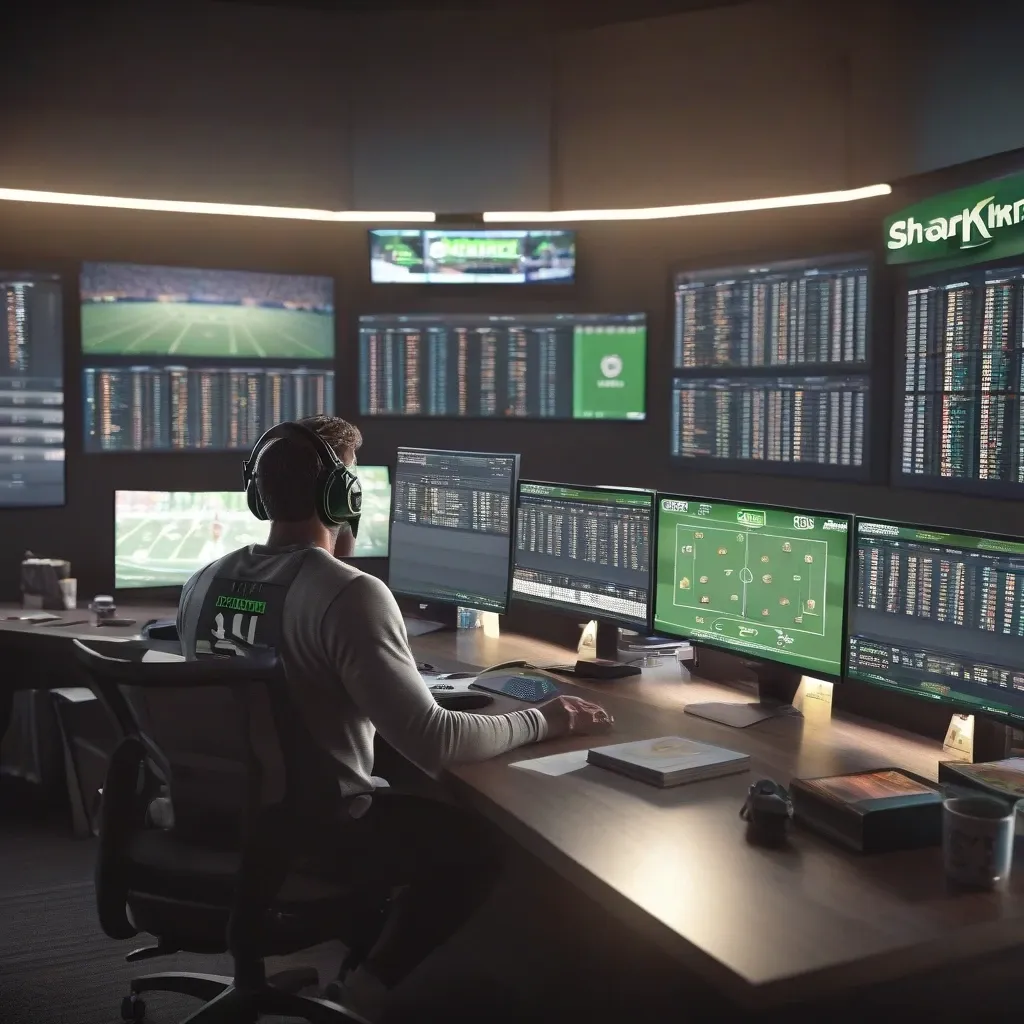
You do not need hours of scanning. A repeatable five-step process, built around odds comparison tools, gets you the best price inside a minute. Step one: Lock in your target—team, spread, or total. No waffling. Step two: Crack open your odds comparison tool. OddsJam, The Action Network, or even a custom spreadsheet works. Just pick one and stick with it. Step three: Scan for the best odds and the best line. Look beyond the price. The number matters just as much. A line that shifted from +3 to +3.5 is a massive deal; you are buying a key number without paying extra. Step four: Act now. Hesitation costs you half-points every single time. Step five: Log the bet and the book you used. That record is your edge over time.
Discipline rule: never place a bet without checking at least three books first. Real example: you want to bet Chiefs -3 against the Bills. One book has -3 (-110). Another has -2.5 (-105). Which is better? The -2.5 at -105 wins. You are buying a half-point for a reduced cost, and that key number of 3 is safer. You avoid a push and get juicier odds. The workflow feels chaotic—tools open, numbers flying, books competing—but that chaos is profit if you follow the steps blind. Do it in sixty seconds or less.
Mastering Odds Comparison Tools
Reading the implied probability from odds changes everything. Use the formula: Implied Probability = 1 ÷ Decimal Odds. That number tells you the market’s true belief—plus the vig. When you see a market with a 108% overround, walk away. That is a sucker bet. Soft lines have inflated vig; sharp books run tight around 102.5%. But here is the catch: the best odds on the board are not always the most reliable. Some books boost lines to bait action on weak sides. That is noise. Check the no-vig line—fair odds—to see if you truly have an edge. Imagine an NBA moneyline: Lakers +150, Celtics -170. The implied probability sum might be 104.2%—that is the vig. Find the same game at another book with a 102.5% overround, and that book is giving you a better deal. Odds aggregator tools surface this chaos fast. Learn to read the noise, filter the boosted traps, and act only on fair markets.
The Hidden Goldmine: Timing Your Bets for Maximum Value
Here’s a truth that separates casual gamblers from the ones who actually make money: when you place a bet matters just as much as which side you pick. The clock is a hidden variable, and most people ignore it. They click “place bet” whenever they feel like it, usually on game day, right before kickoff. That’s a mistake. Why? Because the line you see at 10 AM Sunday is not the same line that opened on Monday morning. And that difference—that little spread—is where profit hides.
This is the concept of Closing Line Value (CLV). Simply put, CLV measures how much better your bet was compared to the final line that the market settled on. Beating the closing line by even a fraction of a point is the single strongest indicator that you’re a winning bettor long-term. It means you saw value before the public and the sharp money pushed the number to its true price.
So what’s the optimal schedule? For NFL, check opening lines early Monday or Tuesday. If the number looks sharp—say it matches your own power ratings—bet it immediately. If you’re unsure, wait until mid-week when injury reports clarify. But always, always re-check an hour before game time. Late line moves happen when a key player is ruled out or weather shifts. I once watched the Patriots open at -3.5 on Tuesday. By Sunday, the line had moved to -6.5 because of a key injury. If I had bet -3.5 early, I got a full 3 points of CLV—which is massive.
| Early Betting (Opening Lines) | Late Betting (Game Day) |
|---|---|
| + Best value, lowest vig – Less information available |
+ Full injury and weather info – Higher vig, often worse number |
| High CLV potential if you’re sharp | Low CLV; you’re following the market |
| Risk: unknown late-breaking news | Risk: line may be “steamed” off value |
Key Numbers: Why Half-Points Matter More Than You Think
NFL games land on 3 or 7 about 25–30% of the time. That’s not a coincidence—those are the most common margins of victory. A half-point can flip a loss into a push, or a push into a win. Last season, I had a bet on the Steelers +3.5 that won by 3. At another book, the line was +3. That half-point turned a loss into a win. That’s $300 I didn’t leave on the table. This is where line shopping pays the absolute most—never accept a key number without checking for a better line.
Overlooked Opportunities: Arbitrage, Promos, and Reduced Juice
Raw odds aren’t the whole story. Smart bettors dig deeper into three often-misunderstood edges: arbitrage, promotional plays, and reduced-juice markets. Let’s clear up the confusion. Line shopping means picking the best price for one side. Arbitrage is different—it’s betting both sides of the same event at different books to lock in a guaranteed profit, no matter the outcome. Sounds perfect, but here’s the catch: true arbs are vanishingly rare, and sportsbooks will limit your account fast once they catch you. That’s why promo hunting is a far more reliable path. Say you deposit $500 and get $500 in bonus bets. Use that bonus on a -110 line—your effective odds jump far above market value. Do the math: a $500 bet at -110 normally returns $954.55. But you only risked your own $500 (the bonus is free money), so your return on risk is ~91%. That crushes any standard -110 line. Warning: don’t chase arbs with a tiny bankroll—one mistake wipes you out. Actionable tip: open one account strictly for promo hunting. Never bet there regularly. Only play when promotions boost your value. This isolates your edge and keeps your main bankroll clean.
How to Spot a Soft Line
A soft line is a temporary mismatch between books. To find one, compare a sharp book—like Pinnacle or Novig—with a recreational sportsbook. If the sharp book moves from -3 to -4, and a rec book still shows -3 ten minutes later, that lag creates a soft line. Two ways to play it: agree with the sharp move? Bet the -4 at the sharp book. Think the market overreacted? Grab the -3 at the rec book before it catches up. Speed matters—these windows close in minutes, not hours.

Common Pitfalls That Kill Your Odds (And How to Avoid Them)
Even experienced bettors keep tripping over the same stupid traps. If you’re not watching for these, you’re basically handing your money away. Mistake #1: Not line shopping at all. You see one book, you bet it, done. That’s how you lose a full percentage point of edge every single time. Counter: open accounts at four or five books and check every line before clicking. Mistake #2: Only looking at odds, not the line itself. -110 on -3 is not the same as -105 on -2.5. The line movement matters more than the juice. Counter: always compare the actual spread or total, not just the price tag. Mistake #3: Betting parlays on soft books where the vig is 15‑30%. If you’re betting parlays at DraftKings without comparing the same parlay on FanDuel, you’re giving away 5% of your return. Counter: use a parlay calculator and stick to books with lower hold percentages. Mistake #4: Forgetting to check promo boosts before betting. You lock in a regular line, then five minutes later see a boosted same‑game parlay. Missed opportunity. Counter: always scan the promotions tab first. Mistake #5: Not documenting your picks. Without tracking CLV (closing line value), you have zero idea if you’re actually good or just lucky. Counter: throw every bet into a spreadsheet with the line at kickoff. Awareness of these mistakes puts you ahead of 90% of bettors.
The Vig Trap in Exotic Markets
Standard NFL spread markets carry a vig around 4‑5%. That’s manageable. But look at Super Bowl futures: you’re staring down a 20‑30% house edge. Same for most player props on traditional books. If you need a 60% win rate to break even on a -150 line, but you need a 75% win rate on a -300 line, that’s a losing proposition over time. Counter: avoid high vig markets unless you get a promo or find a sharp book offering reduced juice. And props on PrizePicks or Underdog? They often have better expected value than the same prop at a standard sportsbook. Stick to the lower‑vig side of the street.
Building Your Personal Odds Database: Tracking CLV for Long-Term Success
Your Scoreboard Against Luck
Forget win-loss records—they’re liars. The only truth-teller is your Closing Line Value (CLV) over hundreds of bets. That single number, tracked religiously, separates smart betting from dumb luck. This isn’t about gut feelings; it’s about building a personal odds database that proves your process works.
Setting Up Your Tracking System: It’s brutally simple. A spreadsheet or basic betting app works. You need exactly seven columns: Date, Sport, Bet, Wager Amount, Price Taken, Closing Price, CLV (+/-), and Result. Nothing more. No fancy math required.
Calculating CLV Without Confusion: You took +3.5; the closing line hits +3. Your CLV is +0.5 points. That’s it. Over 500 bets, a consistent +0.25 CLV chip? That’s serious money building, not a fluke. You’re proving you bought value before the market wised up.
My Monthly Ritual: I review my CLV every single month. Here’s the trick: positive CLV but a losing record? I know instantly—variance parked in my lane, not a broken system. Negative CLV with wins? That’s borrowed luck, due back tomorrow. This habit is the only way to separate skill from chance.
Conclusion: The One Habit That Changes Everything
Let’s cut through the noise. Line shopping isn’t some advanced tactic reserved for sharp syndicates. It’s the absolute baseline. The difference between a 48% and a 52% win rate often boils down to nothing more than grabbing the best number every single time. Three takeaways that separate the winners from the crowd: First, you need accounts at five or more sportsbooks—no excuses, just open them. Second, use a comparison tool before every single wager, no exceptions. Third, start tracking your Closing Line Value (CLV) religiously; that number tells you if you’re actually good or just lucky.
Here’s the final, non-negotiable rule: Starting today, make this your rule: Never place any bet until you have checked at least three books. Do that, and you’ve already separated yourself from 90% of bettors—without picking a single game differently. Discipline at the window beats genius in the spreadsheet every time. Go open those accounts now.